

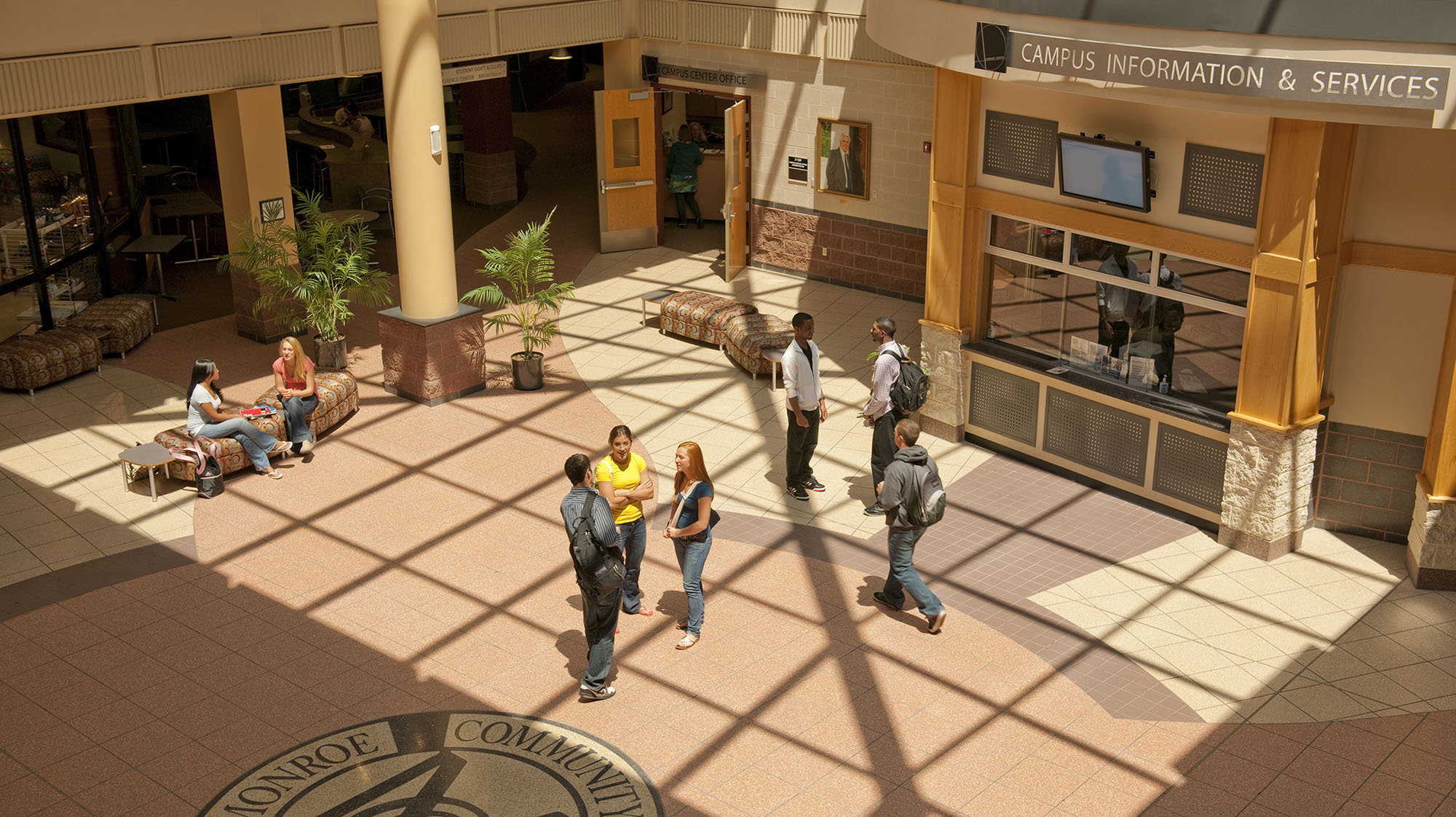
At MCC, students are encouraged to contribute positively to the campus community and take responsibility for their actions. The College's conduct process emphasizes fairness, respect, and educational growth while helping students navigate challenges and resolve concerns appropriately.
The Student Code of Conduct outlines the expected behavior of each student, whether inside or outside of the classroom. All students, upon entrance to the College, agree to abide by the rules and regulations that are set forth in the Student Code of Conduct. Thus, each student is responsible for conforming his or her conduct to the requirements of this code and applicable federal, state, and local laws. In addition, students are expected to comply with the rules of the classroom, which are set by the faculty.
Violations of the Student Code of Conduct will be adjudicated by the Monroe Community College judicial system, which reflects and supports the educational mission of the institution. This system ensures fair and equitable treatment to all individuals who are charged with or who are the victims of student misconduct. Accused students can elect to have their cases heard administratively by the Director of the Office of Student Rights and Responsibilities or another hearing officer within the judicial system or to proceed through the College’s judicial board process.
Any written complaint filed against a student, which alleges classroom or non-academic misconduct, will be forwarded to the Office of Student Rights and Responsibilities. After consultation with the complainant (the complainant could be a student, staff member, or faculty member), the Director will schedule a judicial conference with the student to review the charges and the hearing process as outlined below. An advisor may be present during this judicial conference and any subsequent hearing, but may not participate in any of the judicial proceedings.
In the event that students have an academic concern or grade dispute, faculty are encouraged to consult their department chair about the academic grievance procedures. Faculty are also required to report academic dishonesty using the online behavioral incident report (BIR) form, to be tracked by the Office of Student Rights and Responsibilities.
Certain behavior violates both the campus regulations and the generally-applicable laws. In such instances, the College may institute disciplinary action prior to the adjudication of the offense(s) in off-campus courts or may await the outcome of off-campus prosecution before initiating the campus disciplinary process. The fact that civil authorities may or may not impose punishment will not prevent the College from protecting its educational mission and its community by taking suitable action against a student. Certain college departments, facilities, academic programs, student organizations, clinical, or other off-campus assignment sites have additional behavioral guidelines and related policies and procedures that apply to students. For further information, contact the Office of Student Rights and Responsibilities.
The classroom environment must be characterized by order, civility, and mutual respect among faculty and students. Faculty often handle classroom misunderstandings by placing their expectations in their course information sheets and addressing expectations on the first day of class. Students must also adhere to Monroe Community College's Student Code of Conduct.
When a problem arises that threatens an appropriate classroom environment, including online, laboratory, clinical setting, and other learning spaces, it is important to deal with the issue promptly according to the following steps. (There may be situations that warrant an immediate referral to the Office of Student Rights and Responsibilities, and faculty should consult their department chair in those matters.)
When a problem arises that threatens an appropriate classroom environment, including online, laboratory, clinical setting, and other learning spaces, it is important to deal with the issue promptly according to the following steps. (There may be situations that warrant an immediate referral to the Office of Student Rights and Responsibilities, and faculty should consult their department chair in those matters.)
The Director of Student Rights and Responsibilities will contact the faculty member within one business day of receipt of the complaint to agree upon the most suitable immediate action:
OR
In both cases, the investigation will include a meeting with the student and the Director of Student Rights and Responsibilities to discuss the behavior and plan to amend the behavior. The Director of Student Rights and Responsibilities will email this plan to the student, faculty member, and department chair, clearly outlining expectations regarding the student's return to class.
Upon returning to class in either case, if the student does not comply with the plan, he or she will be immediately removed and sent to the Office of Student Rights and Responsibilities, where the judicial conduct process will begin.
* This does not mean interruptions to the classroom such as sleeping or texting, but serious behavioral incidents that interfere with the learning environment of all students.
Though most judicial matters are handled administratively between the student and the Director of Student Rights and Responsibilities, some cases are referred to the College Judicial Board. Cases that are presented to the Board are usually presented by the Director of Student Rights and Responsibilities. If, however, a case involves classroom conduct, it is in the best interest of the institution that the faculty member(s) involved in the case be present at the hearing to serve as a presenter or witness. Parties will wait in separate rooms before appearing in the hearing. Additional guidelines will be shared by the Director when a judicial hearing is necessary.

